




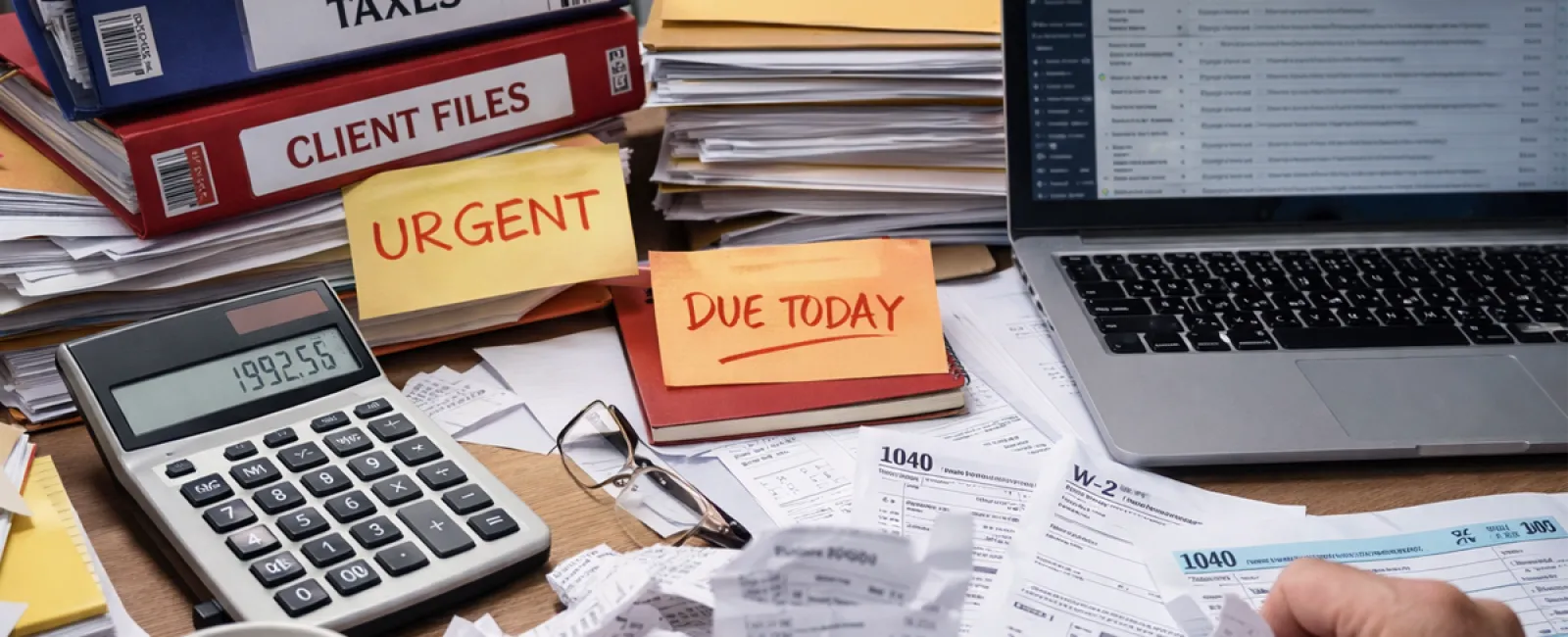
During Tax Season, Slow Down to Stay Secure
Why March Demands a Little More Intention
It's March.
Your accountant is deep in filings.
Your finance team is juggling deadlines.
Inbox volume is climbing.
Everyone is moving fast.
That's normal.
What's also normal? A measurable spike in phishing attempts during tax
season. Security researchers consistently report a significant increase in
tax-themed scam emails this time of year often blending seamlessly into
everyday business communication.
This isn't random.
It's strategic timing.
Let's talk about why March creates opportunity for attackers and how to
stay ahead without overcomplicating things.
It's Not Just Accounting Firms Being Targeted
Many business owners assume these attacks are aimed at CPAs.
They're not.
They're aimed at the ecosystem around them.
During tax season:
- Sensitive documents move quickly
- Verification steps get shortened
- Urgent requests become routine
- "Just send it over" replaces
process
Speed increases. Friction decreases.
And that's when small mistakes become expensive ones.
Attackers don't go after calm, methodical environments.
They go after busy ones.
March is busy.
What These Attacks Actually Look Like
These aren't dramatic, obvious scams.
They're subtle.
An email from "your accountant" asking you to resend W-2s.
A vendor requesting updated banking details.
A DocuSign for a "tax document" needing signature today.
An urgent message from leadership traveling and needing help immediately.
Nothing looks outrageous.
It looks like business.
That's why it works.
Why Smart Teams Still Get Caught
This isn't about carelessness.
It's about cognitive load.
When deadlines stack up, people scan instead of read.
They assume instead of verify.
They respond instead of pause.
Attackers design emails specifically for moments like this.
They don't need you reckless.
They just need you busy.
Four Practical Ways to Reduce Risk This Month
You don't need a security overhaul. You need intentional habits.
1. Verify payment changes by phone
If a vendor's banking information "changes," don't reply to the email.
Call a trusted number and confirm directly.
This one habit prevents some of the most costly fraud incidents we see.
2. Treat urgency as a pause signal
If someone requests sensitive documents immediately, slow down.
Legitimate requests can survive verification. Scams can't.
3. Use a second communication channel
If something feels urgent, confirm it via phone, text, or internal chat.
Two minutes of verification can prevent weeks of recovery.
4. Give your team permission to slow
down
A five-minute reminder goes a long way:
"It's okay to double-check. It's okay to ask."
That cultural shift alone reduces incidents significantly.
This Isn't About Fear. It's About Professionalism.
Tax season is demanding enough.
The attacks that appear now aren't especially sophisticated. They're
simply well-timed.
They rely on:
- Rushed decisions
- Assumptions
- Fatigue
Strong organizations don't eliminate risk entirely.
They reduce exposure through deliberate habits.
And during busy months, small pauses make a big difference.
A Quick Busy-Season Check-In
You may already have solid processes in place and that's great.
But if tax season tends to push your team into reactive mode, or you're
unsure how urgent financial requests are handled under pressure, it may be
worth a short conversation.
No scare tactics.
No pressure.
Just clarity.
Schedule a discovery call and let's make sure busy season doesn't become
breach season. https://chrcreative.com/discoverycall